 English
 中文简体
中文简体

The manufacturing landscape is constantly evolving, and nowhere is this more visible than in the production of die casting molds. As industries demand tighter tolerances, faster turnaround times, and reduced production costs, manufacturers are turning to automation technologies to stay competitive. One such advancement — the integration of automatic trimming into the die casting mold process — is fundamentally reshaping quality standards across automotive, aerospace, electronics, and consumer goods sectors.
Automatic trimming refers to the use of automated machinery, robotic arms, CNC trimming presses, or laser systems to remove flash, runners, gates, and excess material from cast parts immediately after ejection from the mold. When this process is seamlessly integrated into the die casting workflow, the effects on mold quality, product consistency, and operational efficiency are profound.
Understanding Flash and Overflow in Die Casting Molds
Before exploring the impact of automation, it's essential to understand the problem it addresses. During the die casting process, molten metal is injected under high pressure into a die casting mold. Despite precise engineering, small amounts of metal inevitably seep into parting lines, ejector pin locations, and overflow wells — creating what is known as "flash."
Flash is not merely cosmetic. Left unaddressed, it can:
- Interfere with assembly fit and tolerances
- Cause dimensional inaccuracies that fail quality inspections
- Create safety hazards with sharp edges
- Damage downstream tooling or assembly equipment
- Increase manual labor and inspection time
Traditionally, flash removal was a manual, labor-intensive step conducted after parts cooled. Workers used hand tools, grinding wheels, or trim dies operated manually. This approach introduced inconsistency, fatigue-related errors, and bottlenecks in high-volume production lines.
What Is Automatic Trimming in Die Casting?
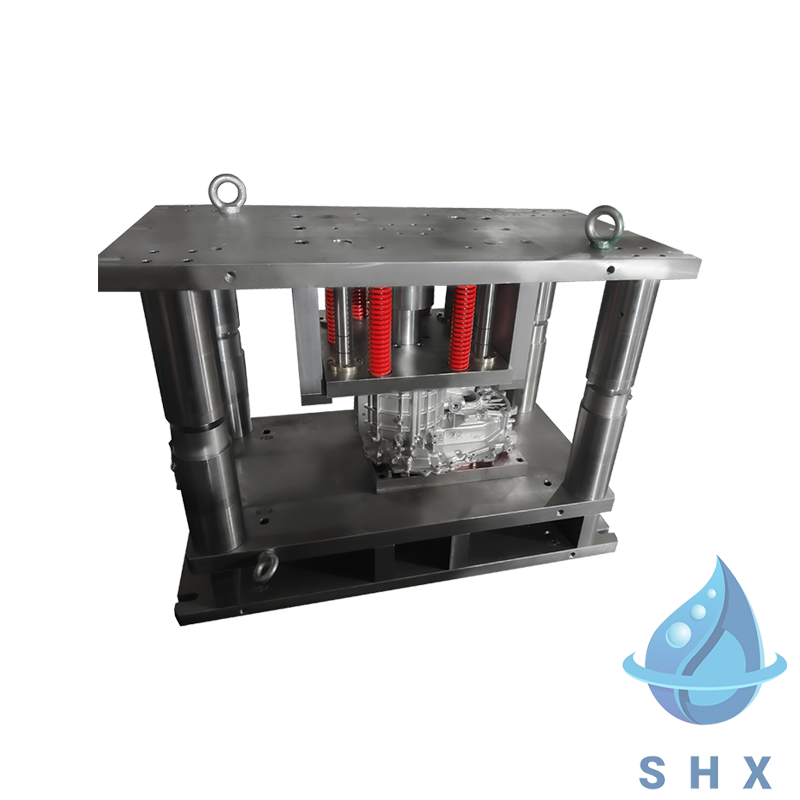
Automatic trimming integrates mechanical or robotic trimming systems directly into the die casting cell. Immediately after a part is ejected from the die casting mold, a robotic arm transfers it to an automated trim press or trimming station, where excess material is removed with speed and precision — typically within seconds.
Types of Automatic Trimming Systems
- Hydraulic Trim Presses: High-force presses that shear excess material using hardened trim dies matched to part geometry.
- CNC Machining Centers: Computer-controlled milling or routing that trims complex 3D surfaces with extreme accuracy.
- Robotic Deburring Systems: Six-axis robots with grinding or cutting attachments that follow programmed paths around part edges.
- Laser Trimming: High-precision laser cutting for thin-walled parts or applications requiring minimal material removal with no mechanical stress.
- Water Jet Trimming: High-pressure water cutting for delicate or heat-sensitive components.
Manual vs. Automatic Trimming: A Direct Comparison
The shift from manual to automatic trimming represents one of the most impactful upgrades a die casting mold facility can make. The following comparison highlights the core differences:
| Criteria | Manual Trimming | Automatic Trimming |
| Consistency | Variable; operator-dependent | High repeatability, part-to-part |
| Cycle Time | 30–120 seconds per part | 3–15 seconds per part |
| Dimensional Accuracy | ±0.5mm or more | ±0.05mm or better |
| Labor Cost | High (dedicated operators) | Low (minimal supervision) |
| Scrap Rate | 3–8% | 0.5–1.5% |
| Mold Wear Impact | Indirect; may damage mold during handling | Isolated from mold; extends mold life |
| Worker Safety | High risk of cuts and burns | Greatly reduced human exposure |
| Integration with QC | Manual inspection required | Vision systems can inspect inline |
Direct Impact on Die Casting Mold Quality
1. Enhanced Dimensional Precision
Automatic trimming systems are engineered to remove flash to exact specifications defined in the part drawing. Since the trim dies or robotic paths are programmed to match the die casting mold geometry precisely, every part exits the trimming station within the same tight tolerances. This level of repeatability is simply unachievable with human operators, particularly in high-volume runs of thousands or millions of parts.
2. Improved Surface Quality and Finish
When trimming is performed while the part is still warm (hot trimming), the metal is more ductile and shears cleanly without cracking or tearing the base material. Automatic systems can be precisely timed to operate at the optimal part temperature window, resulting in cleaner parting line surfaces, smoother edges, and reduced need for secondary finishing operations on die casting molds output.
3. Extended Die Casting Mold Life
One underappreciated benefit of automatic trimming is its protective effect on the mold itself. When parts are manually handled after ejection, there is risk of dropping, banging, or mishandling that can damage the mold cavity face or ejector pins. Robotic handling eliminates this risk entirely. Furthermore, by maintaining consistent flash removal, automatic trimming reduces the buildup of excess material that could otherwise stress mold parting lines over time, thereby extending the operational lifespan of expensive die casting molds.
4. Reduction in Scrap and Rework
Scrap reduction is one of the most measurable quality improvements that automatic trimming delivers. Inconsistent manual trimming often results in under-trimmed parts (failing dimensional specs) or over-trimmed parts (damaging the functional surface). Automated systems eliminate this variability. Facilities that have transitioned from manual to automatic trimming on high-precision die casting mold lines regularly report scrap reductions of 60–80%.
5. Faster Quality Feedback Loops
Modern automatic trimming cells are often paired with inline vision inspection systems. As each part is trimmed, cameras and sensors measure critical dimensions, check for surface defects, and verify gate removal completeness. Any deviation triggers an automatic reject and alerts the operator in real time. This dramatically shortens the time between a mold problem occurring and its detection — protecting both part quality and die casting mold integrity.
Operational and Economic Benefits Beyond Quality
While quality improvement is the headline benefit, automatic trimming also delivers compelling operational advantages that reinforce the business case for integration:
Cycle Time Compression
Automatic trim presses can complete a full trim cycle in under 10 seconds for most aluminum or zinc die casting mold parts. When integrated inline with the casting machine, trimming occurs concurrently with the next injection cycle, effectively adding zero net time to overall part cycle time. This is a massive throughput advantage over batch-style manual trimming operations.
Material Recovery Efficiency
Automated trimming systems collect runners, gates, and flash in a centralized scrap bin. This clean separation of alloy scrap from finished parts simplifies recycling, maintains material traceability, and often increases the value of recovered metal by keeping it uncontaminated. For high-value alloys used in precision die casting molds, this is an important secondary cost benefit.
Workforce Redeployment
Rather than eliminating jobs, leading manufacturers use automatic trimming to redeploy skilled workers from repetitive trimming tasks to higher-value activities: mold maintenance, quality engineering, process optimization, and machine supervision. This elevates both workforce capability and morale while reducing workplace injury risk from repetitive motion and sharp metal edges.
Industry-Specific Impact of Automatic Trimming on Die Casting Molds
| Industry | Key Quality Requirement | Benefit of Auto-Trimming |
| Automotive | Structural integrity, tight fit | Consistent parting line, no flash on sealing surfaces |
| Aerospace | Weight precision, traceability | Laser trimming to ±0.02mm; full inspection integration |
| Electronics | Micro-geometry, no burrs | Precision CNC trimming for connector housings |
| Medical Devices | Surface cleanliness, sterility | Automated trimming avoids hand contamination |
| Consumer Products | Aesthetic finish, cost control | High-speed trimming reduces unit cost |
Designing Die Casting Molds for Automatic Trimming Compatibility
Achieving maximum benefit from automatic trimming requires that die casting molds be designed with trimming in mind from the outset. Retrofitting trimming systems to poorly designed molds is costly and often only partially effective. Key mold design principles for trimming compatibility include:
- Gate Location Standardization: Position gates in areas accessible to the trim press without requiring complex part repositioning.
- Consistent Parting Line Design: Flat or single-plane parting lines are significantly easier to auto-trim than complex 3D parting surfaces.
- Overflow Well Sizing: Oversized overflow wells are harder to trim cleanly; design them to the minimum functional volume.
- Ejector Pin Placement: Position ejector pins to allow robotic gripping without interference during the transfer to trimming station.
- Part Orientation Fixturing: Design parts with self-locating features that make repeatable placement in the trim die simple and fast.
When mold designers collaborate with trimming system engineers during the early design phase, the result is a seamlessly integrated cell where the die casting mold, casting machine, robot, and trim press function as a single optimized system.
Challenges and Considerations in Automatic Trimming Integration
Despite its many advantages, automatic trimming integration is not without challenges. Understanding these helps manufacturers plan investments wisely:
- Initial Capital Investment: Trim presses, robotics, and vision systems represent significant upfront costs, though ROI is typically achieved within 12–36 months on high-volume lines.
- Trim Die Maintenance: Like die casting molds themselves, trim dies wear over time and require scheduled maintenance and periodic replacement.
- Part Geometry Complexity: Highly complex, multi-plane parts may require advanced robotic trimming solutions that are more expensive and time-consuming to program.
- Changeover Time: Switching between different part numbers requires changing trim dies and reprogramming robots, which must be factored into production scheduling.
- Process Integration: Tight synchronization between casting machine cycle times and trim press availability is essential to avoid bottlenecks or part queuing issues.
Frequently Asked Questions (FAQ)
Q: Does automatic trimming work for all types of die casting mold materials?
Automatic trimming is effective for aluminum, zinc, magnesium, and copper alloy die castings. The specific trimming method — mechanical press, CNC, or laser — is selected based on material hardness, wall thickness, and part geometry. All common die casting mold alloys are compatible with some form of automatic trimming.
Q: At what production volume does automatic trimming become cost-effective?
Generally, automatic trimming justifies its investment at annual volumes above 50,000–100,000 parts per cavity. For very high-volume automotive die casting molds producing millions of parts per year, the ROI case is overwhelming. For lower volumes, semi-automatic or shared trimming cells may offer a better balance.
Q: Can automatic trimming replace secondary machining operations?
In many cases, yes. When trim dies are precisely engineered, automatic trimming can achieve surface finish and dimensional accuracy sufficient to eliminate separate deburring, grinding, or finishing steps. This is especially true for die casting molds designed with trimming in mind from the start.
Q: How does automatic trimming affect mold design lead time?
Designing a die casting mold for automatic trimming compatibility may add 5–15% to the initial design time, as engineers must plan gate and overflow positions with the trim system in mind. However, this upfront investment is recovered many times over through reduced production costs and improved part quality.
Q: Is it possible to retrofit automatic trimming to an existing die casting mold line?
Yes, though the ease of retrofit varies significantly by mold and part geometry. Molds with straightforward parting lines and accessible gates retrofit well. Complex molds may require partial redesign. A feasibility study by an experienced automation integrator is recommended before committing to a retrofit project on an established die casting mold operation.
Conclusion
The integration of automatic trimming into the die casting mold production process represents a decisive leap forward in manufacturing quality, consistency, and efficiency. By removing the variability of manual flash removal, automatic trimming enables die casting molds to consistently deliver parts that meet tighter tolerances, exhibit superior surface finish, and require less secondary processing.
The evidence is clear across industries from automotive to aerospace: facilities that invest in well-integrated automatic trimming systems see measurable improvements in scrap rates, cycle times, mold longevity, and overall part quality. As global competition intensifies and customer expectations for precision continue to rise, the automatic trimming of die casting molds has evolved from a competitive advantage into an operational necessity.
For manufacturers evaluating this transition, the key to success lies in a holistic approach — designing die casting molds and trimming systems together, selecting the right trimming technology for each application, and committing to proper maintenance of both the mold and the trim die. When executed correctly, the integration of automatic trimming is not just an improvement to the process — it is a transformation of what die casting mold quality can achieve.
 +0086-18158459905